Living 3 minute read
A Bedroom That Is Easier to Wind Down In
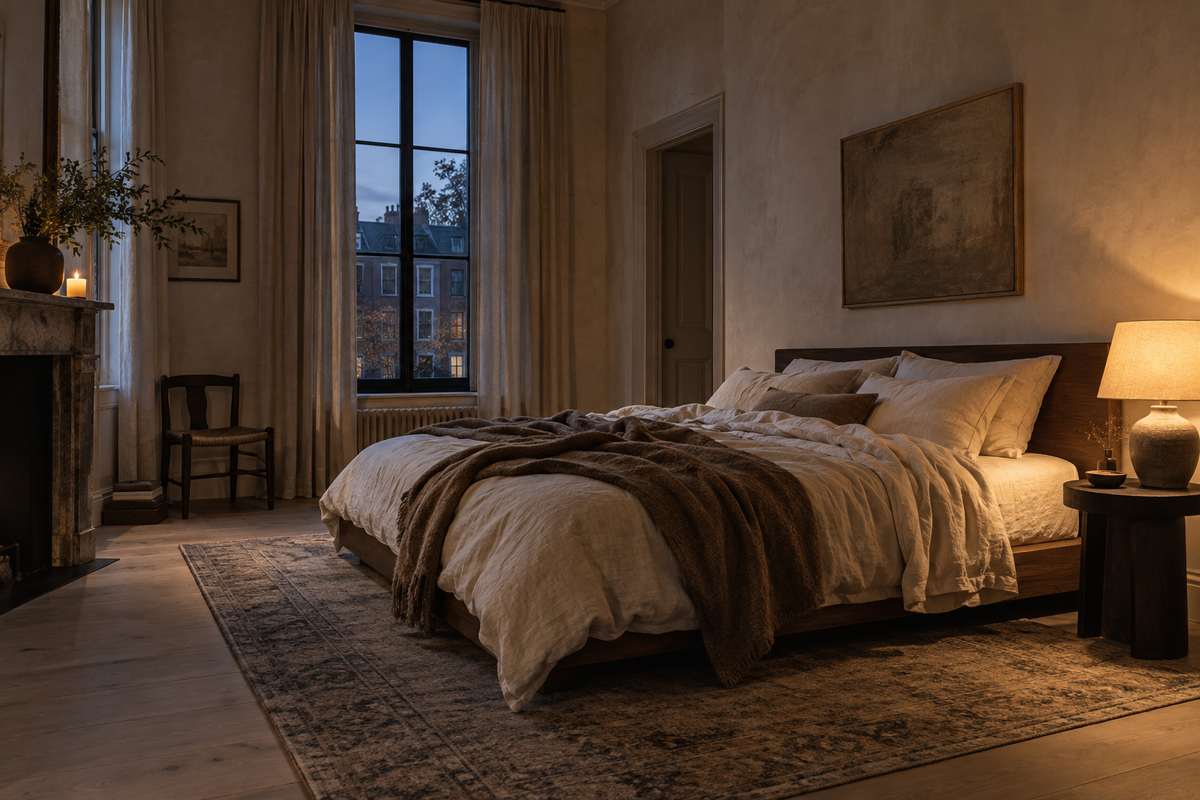
Start with the surfaces, light, and everyday details you notice at the end of the day.
A bedroom can be beautifully furnished and still ask too much of you at night. The bedside table is crowded. The only light is overhead. The chair has become a place for everything that does not yet have a home. None of these things requires a complete redesign to reconsider.
Look at the room from the moment you use it most. What do you reach for? What do you have to move? What would make the last few minutes of the day feel simpler?
Give the bedside a useful job
Clear the surface, then return only the things you regularly use there. A reading light, a book, a glass on a suitable coaster, perhaps one personal object. What belongs will differ from one person to the next.
If the table is small, choose an arrangement that leaves room to set something down. Let the proportions of the space guide you. A bedside does not need several decorative layers to feel finished; it needs to work comfortably from the bed.
Look at the light you actually use
Consider whether your lighting supports the activities that happen in the room. A lamp for reading serves a different purpose from a light used to find something in a drawer. Check the position and controls from where you sit or lie down, and choose bulbs and fittings according to their manufacturers’ guidance.
Try the room in the evening before making a decision about it. Daylight can disguise glare, awkward shadows, or a light source that feels too prominent once the rest of the home is quiet.
Let textiles earn their place
Choose layers according to comfort, care, and how you use the bed. A throw might add texture, provide an extra layer, or do both. Decorative pillows may be something you enjoy, or simply something you move twice a day.
There is no required number. Keep the layers that make sense for you. A bed can feel inviting with a restrained arrangement, especially when the materials and colors have a relationship to one another.
Give the temporary pile a destination
The chair full of clothes often points to a missing intermediate place: somewhere for things that are not ready for the wardrobe or the laundry. A hook, a suitable basket, or a deliberate section of storage may be more useful than another decorative object.
Do the same for chargers, work papers, and the small items that collect at night. You need an arrangement that makes ordinary life easier.
Finish with one detail you like seeing when you enter the room. A picture, a familiar textile, a small object with a story. The room should still feel like yours when the bed is unmade and the book is open.
Start with one change you can notice tonight, and let the room evolve around what works.
Preview the upcoming DOMA Boxes for a considered approach to the details at home.