Objects 3 minute read
The Case for Buying Fewer, Better-Chosen Things
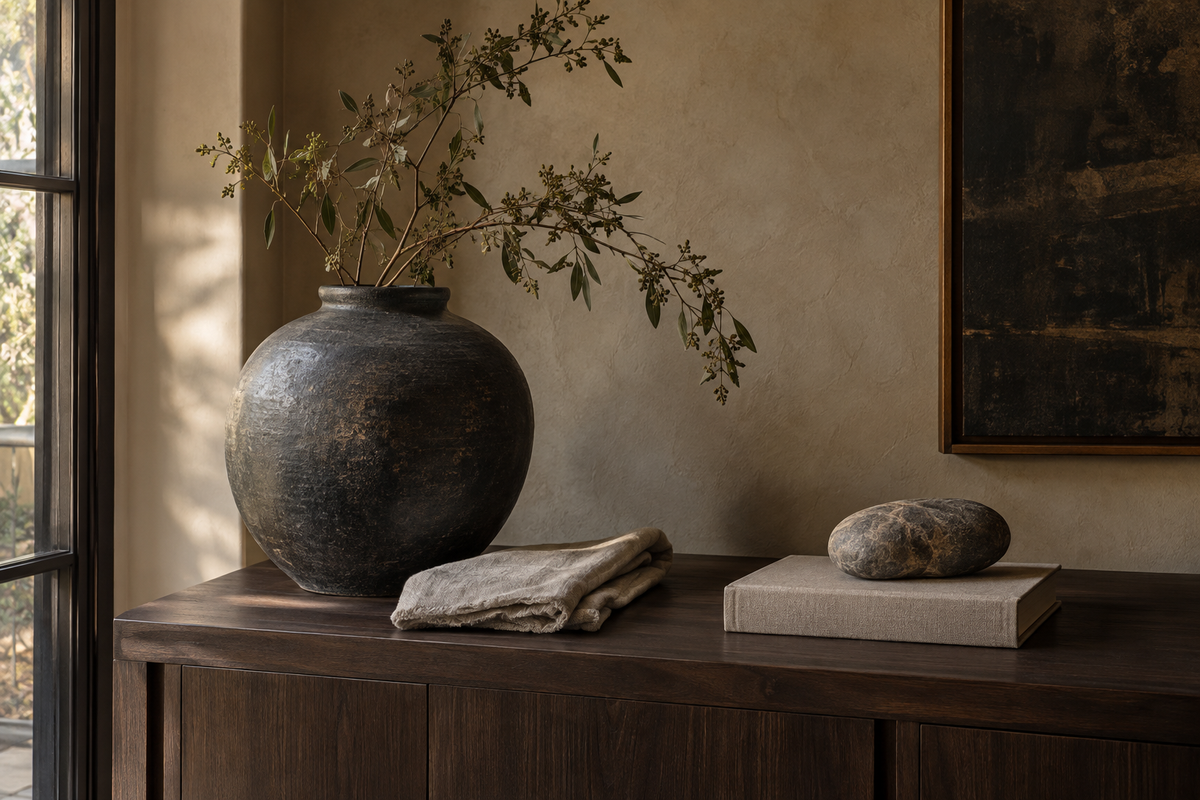
An edit begins with a question: what role will this piece play in the home you already have?
There is no shortage of beautiful objects to look at. The harder task is deciding which ones belong in your life. A saved photograph can tell you that you like a room. It cannot tell you whether its chair will fit beside your sofa, whether its pale textile suits your household, or whether you need another vessel for the shelf.
Choosing well starts before the purchase. It asks you to connect attraction with use, proportion, and the things already around you.
Name the job
Before looking for an object, describe what you want it to do. “I need somewhere to put a cup beside this chair” is a more useful starting point than “I need something for this corner.” “The room needs a softer surface” will lead to different choices from “The room needs somewhere for guests to sit.”
Sometimes the job is simply to give pleasure. That is a real reason to keep an object. Naming it helps you distinguish a piece you love from one that only seems to complete somebody else’s picture.
Bring the room into the decision
Measure the space and keep the numbers with you. Take a photograph in daylight. Look at the colors and materials that are already doing most of the work. A new object can echo one of those elements, or create a considered contrast with it.
If you are unsure about scale, mark out the footprint with paper or tape that is suitable for the surface. A measurement on a product page becomes much easier to understand when you can see how much space it occupies.
Read the practical details
Material, dimensions, care, and what is included are part of the design decision. A surface that needs particular care may be perfect for one home and frustrating in another. A pillow cover and a complete pillow are different purchases. A beautiful photograph does not answer either question.
Look for the facts you would want a knowledgeable shopkeeper to explain. If they are missing, ask before ordering. A considered purchase should leave you with a clearer idea of the object, as well as a stronger feeling about the image.
Imagine more than one arrangement
Can the piece work somewhere else as your home changes? A useful object does not need to be endlessly versatile, but it helps to understand how closely it depends on one arrangement. Something chosen for a particular corner may be exactly right. Something you can move between rooms offers a different kind of freedom.
Give yourself time to decide. Save the item, return to the room, and look again. You may find that rearranging what you own resolves the original need. You may also find that the piece still feels right after the first moment of excitement has passed.
That is the value of an edit: a smaller selection with a clearer reason for being.
A home need not be empty or perfectly consistent. It can simply be a place where the things you add have been invited in with some thought.
Preview the upcoming DOMA Boxes, and join the list for news as the collections take shape.